Comprehensive fleet operations checklist for Canadian charter fleets in 2026. Reduce violations by 67%, boost compliance, and automate inspections with proven strategies.
Fleet operations checklist for Canadian charter fleets 2026
Canadian charter fleet managers face mounting pressure in 2026. Regulatory scrutiny intensifies daily, manual processes drain resources, and one missed inspection can cascade into violations costing thousands. A comprehensive fleet operations checklist isn’t optional anymore—it’s the foundation that keeps your operation compliant, profitable, and competitive in an era where digital automation fundamentally transforms how successful fleets operate.
Table of Contents
Selection Criteria: How To Choose The Right Fleet Operations Checklist Components
Inspection And Maintenance Best Practices
Compliance And Regulatory Requirements
Automation And Digital Solutions For Fleet Operations
Summary Comparison Table
Situational Recommendations: Choosing The Best Fleet Operations Approach For Your Company
Streamline Your Fleet Management With GridOps
Key takeaways
Point | Details |
|---|---|
Structured checklists reduce violations | Systematic inspection programs cut roadside violations by 67% and unplanned downtime by 45%. |
Digital tools boost accuracy | Electronic DVIRs and automated workflows achieve over 90% compliance rates compared to paper systems. |
Regulatory standards tighten | Only 7% of carriers pass DOT audits without violations, making comprehensive checklists essential. |
Automation drives profitability | Integrated platforms reduce manual errors by 75% and increase operational efficiency up to 30%. |
Right-sizing matters | Matching checklist complexity to fleet size and growth stage maximizes ROI and adoption. |
Selection criteria: how to choose the right fleet operations checklist components
Your checklist needs to work harder than ever. Start by prioritizing compliance requirements with Canadian and FMCSA regulations—this isn’t negotiable. Violations trigger cascade effects: higher insurance premiums, reduced CSA scores, and lost contracts with safety-conscious clients.
Next, evaluate integration capabilities. Your checklist should connect seamlessly with automated booking, dispatch, and dynamic pricing systems rather than existing as an isolated task list. When inspection data flows directly into maintenance scheduling and financial analytics, you gain real-time visibility into operating costs and vehicle availability. This integration separates reactive fleets from proactive ones.
Consider these critical selection factors:
Regulatory coverage depth: Does it address FMCSA, DOT, and Canadian provincial requirements specific to charter operations?
Maintenance tracking: Can you schedule preventive tasks, track service history, and predict component failures?
Financial visibility: Does it provide KPI dashboards showing cost per mile, maintenance spend, and revenue per vehicle?
User adoption design: Will drivers actually use it, or will they revert to paper shortcuts?
Scalability: Can it grow from 5 vehicles to 50 without requiring a complete system overhaul?
Pro Tip: Test any digital checklist solution with your most skeptical driver first. If they find it intuitive and faster than paper, adoption across your fleet will follow naturally.
The best approach combines regulatory necessity with operational efficiency. A checklist that merely satisfies compliance auditors but slows down daily operations will fail. Look for solutions that make drivers’ jobs easier while simultaneously capturing the data you need for fleet management step by step optimization. When your team sees immediate benefits like faster pre-trip inspections or automated defect reporting, they become your strongest advocates for the system.
Inspection and maintenance best practices
Daily inspections form your first line of defense against costly breakdowns and violations. Structured fleet inspection programs reduce roadside violations by 67% and cut unplanned downtime nearly in half. These aren’t abstract statistics—they translate directly to fewer roadside delays, lower repair costs, and happier clients who receive on-time service.
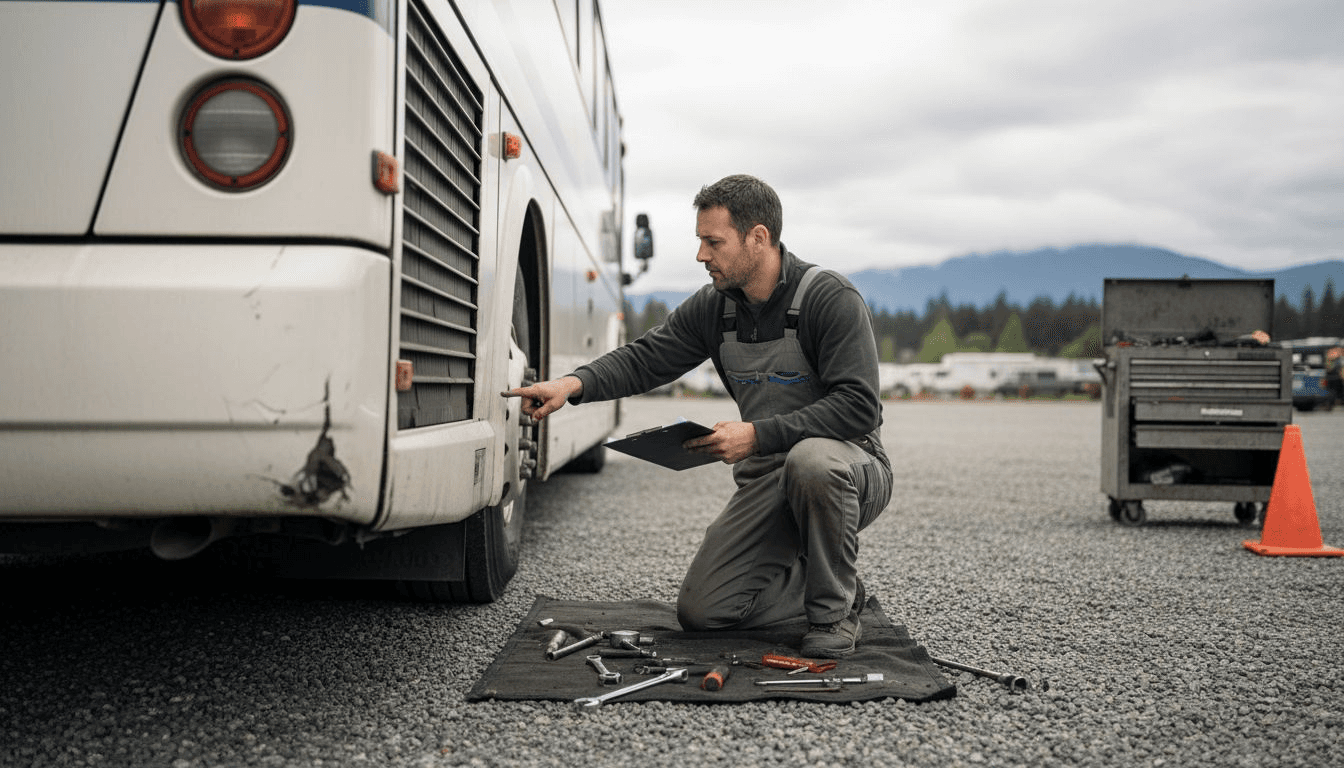
Digital Driver Vehicle Inspection Reports transform this critical process. Traditional paper DVIRs get lost, damaged, or completed hastily in illegible handwriting. Electronic systems force completion before vehicle startup, photograph defects instantly, and route critical issues to maintenance staff in real time. The data shows impact: DVIRs help prevent approximately 14,000 accidents annually through early defect identification.
Implement these inspection and maintenance practices:
Enforce pre-trip and post-trip DVIRs with digital tools that won’t allow trip completion until inspection submission
Adopt predictive maintenance using telematics data to identify failing components before they cause breakdowns
Document everything thoroughly with timestamped photos and technician notes that satisfy audit requirements
Schedule maintenance proactively based on actual usage data rather than arbitrary mileage intervals
Track parts inventory to ensure critical components are available when needed, reducing vehicle downtime
Your maintenance philosophy should shift from reactive to preventive. Waiting for components to fail costs three to five times more than scheduled replacement. Telematics systems now predict brake wear, tire condition, and engine issues weeks before failure, letting you schedule repairs during naturally slow periods rather than emergency situations that disrupt revenue operations.
Pro Tip: Create severity-based defect categories in your digital inspection system. Minor issues get scheduled for next regular maintenance, while critical safety problems trigger immediate vehicle grounding and priority repair workflows.
The return on investment appears quickly. Fleets report 20-30% reductions in emergency repairs after implementing structured digital inspection programs. Your drivers spend less time on paperwork, mechanics receive better defect information, and you gain complete visibility into fleet efficiency for bus charters across every vehicle. This systematic approach also creates the documentation trail required when auditors or insurance adjusters review your operation. For detailed inspection protocols and compliance strategies, review comprehensive best practices that address current regulatory standards.
Compliance and regulatory requirements
Regulatory compliance separates sustainable charter operations from those facing mounting violations and eventual shutdown. The stakes have never been higher: only 7% of motor carriers pass DOT audits without any violations. Your checklist must address every regulatory touchpoint, from driver qualification to hours-of-service monitoring.
Driver Qualification Files represent your most common vulnerability. Incomplete or missing DQF documentation forms 12% of FMCSA violations, often discovered during roadside inspections when you’re least prepared. Each file requires current medical certificates, driving record checks, employment history verification, and training documentation. Missing even one element triggers violations that damage your CSA scores and insurance rates.
Electronic Logging Devices eliminate hours-of-service guesswork while protecting drivers from fatigue. ELD mandates continue tightening, and manual log manipulation attempts now trigger automatic flags during inspections. Modern systems integrate directly with dispatch platforms, automatically calculating available driving hours and preventing illegal assignments before they happen.
The regulatory landscape evolved significantly in 2026. Stricter FMCSA CSA Safety Measurement System rules now tie inspection performance directly to carrier ratings, affecting shipper selection and insurance premiums. Poor inspection results cascade through your business faster than ever, making proactive compliance essential rather than optional.
Your compliance checklist must include:
Maintained driver qualification files with automated renewal reminders for expiring certifications
ELD compliance verification ensuring all devices meet current FMCSA technical specifications
CSA score monitoring with monthly reviews and corrective action plans for negative trends
Environmental standards adherence including emissions testing and idling regulations
Insurance and audit readiness with organized digital files accessible within minutes
Many fleets underestimate environmental compliance until faced with substantial fines. Provincial regulations vary widely across Canada, and charter operations crossing borders must satisfy multiple jurisdictions simultaneously. Your checklist should track emission test schedules, diesel particulate filter maintenance, and anti-idling policy enforcement. These items rarely cause immediate operational disruption, making them easy to neglect until regulators arrive.
Audit preparation deserves dedicated attention. When DOT or provincial inspectors request documentation, you have hours, not days, to produce compliant records. Digital systems with centralized storage and instant search capabilities transform audits from terrifying ordeals into routine procedures. This readiness also improves scalable fleet operations by creating the organizational foundation needed for growth. Understanding current requirements through resources like the 2026 fleet compliance checklist ensures you address every regulatory obligation systematically.
Automation and digital solutions for fleet operations
Manual paper checklists represent the operational approach of the past decade. They’re prone to human error, offer zero integration with other systems, and provide no real-time visibility into fleet status. When a driver completes a paper DVIR and files it in the office, that critical information sits dormant until someone manually reviews it—potentially hours or days after a safety issue was identified.
Digital inspection apps solve some problems while creating others. They increase compliance visibility and reduce paperwork, but most operate as standalone systems. You gain electronic DVIRs but still manually coordinate dispatch, track maintenance separately, and export data into spreadsheets for financial analysis. This fragmented approach requires constant context-switching and duplicate data entry across multiple platforms.
Full SaaS fleet management platforms like GridOps represent the current standard for competitive charter operations. These systems unify booking, dispatch, maintenance alerts, compliance tracking, and financial KPIs into one integrated environment. When a driver reports a brake issue during digital inspection, the system automatically grounds that vehicle, notifies maintenance staff, adjusts dispatch assignments, and updates availability for new bookings—all without human intervention.
Automated fleet management systems with real-time dispatch and integrated booking reduce manual errors substantially while increasing operational efficiency by 25-30%. Fleets using electronic DVIRs and digital workflows achieve over 90% compliance rates compared to 60-70% with paper systems. These improvements translate directly to lower violation costs, reduced downtime, and higher revenue per vehicle.
Consider this comparison:
Manual paper systems: Require physical storage, offer no integration, depend entirely on staff diligence, and provide zero real-time visibility
Digital inspection apps: Improve compliance documentation and reduce paperwork but lack booking and dispatch integration
Comprehensive SaaS platforms: Automate workflows across all operations, provide unified data visibility, and scale effortlessly with fleet growth
Pro Tip: Calculate your current cost of manual processes by tracking hours spent on paperwork, duplicate data entry, and coordination calls between dispatch and maintenance. Most mid-size fleets discover they’re spending 15-20 hours weekly on tasks that comprehensive platforms automate completely.
The decision isn’t whether to digitize—it’s which level of integration makes sense for your operation. Small fleets might start with digital inspection apps and graduate to full platforms as they grow. Larger operations or those planning expansion should implement comprehensive systems immediately, as retrofitting processes later creates disruption and resistance. Understanding fleet management solutions automation options helps you match technology investment to business goals. Successful competitive fleet management in Canada increasingly requires integrated platforms that eliminate manual bottlenecks. Resources on current inspection best practices and comprehensive management strategies provide additional implementation guidance.
Summary comparison table
Choosing between manual checklists, digital apps, and full automation platforms requires understanding exactly what each option delivers. This comparison clarifies the trade-offs:
Feature | Manual Paper Checklists | Digital Inspection Apps | Full SaaS Automation Platform |
|---|---|---|---|
Inspection & Maintenance | Paper DVIRs filed physically | Electronic DVIRs with photos | Automated workflows with maintenance integration |
Compliance & Audit | Manual file organization | Digital record storage | Real-time compliance dashboards and alerts |
Booking & Dispatch Integration | None—separate systems | Limited or none | Fully integrated with automated vehicle assignment |
Financial Analytics | Manual spreadsheet export | Basic reporting only | Comprehensive KPI dashboards and profit analysis |
Real-Time Visibility | Zero—delayed by hours/days | Partial—inspection data only | Complete—all operations unified |
Staff Training Required | Minimal | Moderate | Moderate to significant |
Implementation Cost | Negligible | Low to moderate | Moderate to high |
Ongoing Efficiency Gains | None | 15-20% improvement | 25-30% improvement |
Scalability | Fails above 10-15 vehicles | Works to 25-30 vehicles | Unlimited—designed for growth |
The pattern becomes clear: initial simplicity trades against long-term capability. Paper systems require no investment but offer no pathway to operational excellence. Digital apps provide meaningful improvements for smaller operations but create integration headaches as you grow. Comprehensive platforms demand upfront commitment but deliver compounding returns as fleet complexity increases.
Your decision should align with business trajectory, not just current state. If you plan to grow from 8 to 20 vehicles over three years, starting with a scalable platform avoids painful mid-growth migrations. Conversely, a stable 5-vehicle operation might find digital apps perfectly adequate. The key is honest assessment of where your business is heading, not where it sits today. Understanding how to maximize fleet efficiency and the benefits of automated reservations helps frame these technology investments in terms of measurable operational outcomes.
Situational recommendations: choosing the best fleet operations approach for your company
Your ideal solution depends on fleet size, growth plans, and operational complexity. Here’s how to match technology to your situation:
Small fleets (5-10 vehicles, stable operations): Start with digital inspection apps that eliminate paper while keeping costs low. Focus on DVIR compliance and basic maintenance tracking. Integrate with simple scheduling tools rather than comprehensive platforms. This approach works when growth isn’t planned and current processes mostly function.
Mid-size fleets (10-25 vehicles, moderate growth): Implement integrated compliance and maintenance solutions that balance automation scope with budget. Look for platforms offering electronic DVIRs, automated maintenance scheduling, and basic dispatch coordination. Avoid both extremes—pure paper systems that limit growth and over-engineered enterprise platforms with unused features.
Large fleets (25+ vehicles, active growth): Deploy comprehensive SaaS platforms with full automation across booking, dispatch, maintenance, compliance, and analytics. The coordination complexity at this scale makes manual processes impossible to sustain. Unified platforms that handle everything from customer quotes to driver pay become essential infrastructure, not optional upgrades.
Growth-focused operations (any size, expansion planned): Prioritize platforms emphasizing connectivity and revenue management integrations. Your system should connect with resellers, handle dynamic pricing, and provide financial analytics showing profit per route and vehicle. Building on scalable foundations now prevents expensive migrations later. Review scalable fleet operations principles to ensure your chosen solution grows with you.
High-compliance-risk operations: Select solutions offering the strongest audit trail capabilities, automated regulatory updates, and comprehensive documentation. If your operation crosses multiple jurisdictions or serves government contracts, compliance features outweigh other considerations.
Budget matters, but underinvestment costs more long-term than appropriate technology spend. Calculate the true cost of your current approach: staff hours on manual tasks, violation fines, lost revenue from booking errors, and missed growth opportunities from capacity constraints. Most fleets discover that comprehensive platforms pay for themselves within 6-12 months through efficiency gains and error reduction alone.
Streamline your fleet management with GridOps
If you’re ready to move beyond checklists and spreadsheets, GridOps delivers the integrated platform Canadian charter fleets need in 2026. Built specifically for charter and private transportation operators, GridOps unifies booking automation, real-time dispatch, compliance tracking, and financial analytics into one powerful system.

You eliminate manual quote generation, reduce booking errors by 75%, and gain complete visibility into fleet operations from a single dashboard. The platform handles everything from instant customer reservations to driver trip sheets to maintenance alerts, letting you focus on growth instead of administrative chaos. Whether you operate 5 vehicles or 50, GridOps scales with your business while maintaining the compliance rigor Canadian regulations demand. Explore fleet management step by step implementation or discover how automation solutions transform daily operations.
Frequently asked questions
What is the most critical component of a fleet operations checklist?
Comprehensive vehicle inspections form the foundation. Daily pre-trip and post-trip DVIRs catch defects before they cause accidents or roadside violations. When combined with digital tools that route critical issues immediately to maintenance staff, inspection programs deliver the highest ROI of any checklist component.
How often should fleet operations checklists be updated?
Review and update quarterly at minimum, with immediate revisions when regulations change. The 2026 FMCSA CSA modifications required instant checklist adjustments for most carriers. Subscribe to regulatory update services and assign someone to monitor changes affecting your operation continuously.
Can small fleets benefit from digital checklist solutions?
Absolutely. Even 3-5 vehicle operations gain substantial value from electronic DVIRs and automated maintenance reminders. The compliance protection alone justifies modest software costs, and efficiency improvements scale regardless of fleet size. Start with focused digital tools rather than comprehensive platforms if budget is limited.
What ROI should I expect from automated fleet management systems?
Most operators see 15-30% efficiency improvements within 6-12 months, translating to reduced labor costs, fewer violations, and higher revenue per vehicle. The exact return depends on how manual your current processes are. Fleets still using paper across all operations typically see the fastest payback, often under six months.
How do I get drivers to actually use digital checklists?
Make it faster and easier than paper. Choose mobile-friendly systems with intuitive interfaces that require fewer steps than manual processes. Involve drivers in selection decisions, provide hands-on training, and highlight how digital tools protect them from false violation claims by creating timestamped documentation of vehicle condition.
Recommended