Discover why advanced booking systems are essential for Canadian charter operators in 2026. Learn how automation boosts efficiency, expands sales channels, and increases revenue.
Why adopt advanced booking systems for charter transport in 2026
Relying on spreadsheets and phone calls to manage charter bookings creates costly inefficiencies that modern clients will not tolerate. Today’s travelers expect instant, transparent booking experiences like those offered by airlines and ride-sharing apps. Manual methods lead to double bookings, missed revenue opportunities, and frustrated customers who abandon slow quote processes. This guide explores why automated booking systems are essential for Canadian charter operators seeking to compete effectively in 2026 and beyond.
Table of Contents
Understanding The Limitations Of Manual Booking Processes
How Advanced Booking Systems Enhance Operational Efficiency
Expanding Sales Channels With Integrated Online Booking Platforms
Driving Revenue Growth With Dynamic Pricing And Demand Forecasting
Addressing Implementation Challenges And Special Considerations
Optimize Your Charter Operation With GridOps
Frequently Asked Questions About Advanced Booking Systems For Charter Operators
Key takeaways
Point | Details |
|---|---|
Efficiency gains | Advanced booking systems reduce manual errors by up to 75% while freeing staff for strategic tasks. |
Revenue expansion | Integration with online platforms and dynamic pricing increases bookings and average transaction value. |
Sales channels | Real-time inventory connects operators with resellers, hotels, and OTAs to maximize visibility. |
Implementation | Successful adoption requires staff training, phased rollout, and offline options for remote areas. |
Competitive edge | Instant automated quotes meet client expectations and convert prospects faster than manual processes. |
Understanding the limitations of manual booking processes
Most charter operators still juggle emails, phone calls, and Excel spreadsheets to manage bookings. This fragmented approach creates bottlenecks when multiple staff members access the same files or when客户户 information gets lost between systems. The transition from manual processes to digital platforms represents a fundamental shift in operational efficiency that directly impacts customer satisfaction and costs.
Manual booking errors compound quickly. A missed email means a lost sale. An outdated spreadsheet leads to double bookings that damage your reputation and require expensive fixes. When your dispatcher manually enters the same trip details into three different systems, each entry point introduces new error risks that scale with volume.
Consolidating flight planning, ground logistics, and customer management into one digital platform eliminates these redundancies. You gain real-time visibility across your entire operation instead of piecing together information from disconnected sources. The benefits of automated reservations for charter fleets extend beyond error reduction to unlock staff capacity for revenue-generating activities.
Pro Tip: Track the hours your team currently spends on manual data entry and quote preparation. Most operators underestimate this time by 40% or more, which means they miss significant opportunities to reallocate staff toward customer relationship building and sales outreach.
How advanced booking systems enhance operational efficiency
Modern booking platforms use domain-driven design principles to handle complex scenarios like seat selection and real-time inventory updates. Scalable seat-selection systems benefit from domain-driven decomposition rather than arbitrary service splitting, which prevents the architectural mistakes that plague premature microservices implementations.
Technology architecture directly impacts customer experience. Minimal API frameworks reduce latency by 20-40% compared to traditional MVC pipelines, which means your booking page loads faster and handles concurrent users more reliably. This speed advantage converts more browsers into bookers during peak demand periods.
All-in-one platforms unify previously separate workflows for flight planning, vehicle dispatch, and ground transportation coordination. Your staff enters trip details once, and the system automatically updates availability across all channels while generating dispatch instructions and customer confirmations. This integration dramatically reduces the coordination errors that occur when information flows manually between disconnected tools.
System Type | Average Response Time | Booking Error Rate | Concurrent User Capacity |
|---|---|---|---|
Legacy spreadsheet | 15-30 minutes | 8-12% | 1-2 users |
Basic digital system | 5-10 minutes | 3-5% | 5-10 users |
Advanced platform | Instant | <1% | 100+ users |
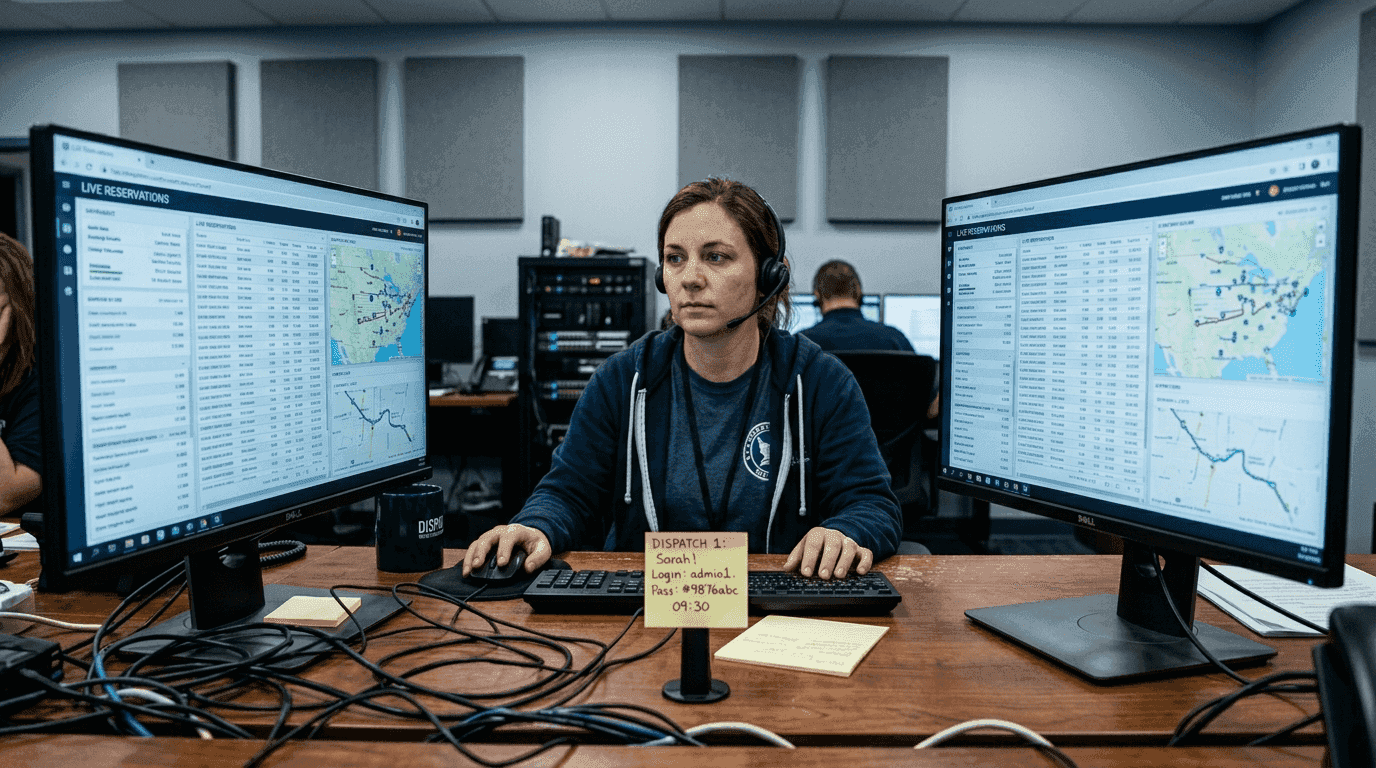
The reservation tracking guide for streamlined operations shows how real-time dashboards replace manual status checking. Your team sees live updates on vehicle locations, driver assignments, and customer special requests without making phone calls or searching through email threads. This visibility improvement helps you optimize routes and respond to last-minute changes without chaos.
Pro Tip: Choose technology platforms built by teams with deep domain expertise in transportation logistics. Generic booking systems lack the specialized features you need, while overly complex microservices architectures create maintenance nightmares that drain your IT resources.
Advanced systems also support the reservation tracking workflow that cuts errors 40% by automating confirmation emails, payment processing, and trip sheet generation. Your drivers receive digital manifests with customer details, pickup times, and route maps automatically instead of relying on printed papers that get outdated as changes occur.
Expanding sales channels with integrated online booking platforms
Advanced booking systems expand sales channels by connecting your inventory to online travel agencies, hotel concierge platforms, and corporate travel management systems. Each integration represents a new customer acquisition channel that operates 24/7 without requiring additional staff to answer phones or respond to quote requests.
Real-time inventory synchronization prevents the embarrassing scenario where you confirm a booking through one channel only to discover the vehicle was already reserved elsewhere. Your availability updates instantly across all platforms when a customer books, which builds trust and prevents the coordination nightmares that plague operators using manual update processes.
Instant quotes meet modern buyer expectations for private transportation services. Today’s clients compare multiple providers within minutes using their smartphones. If your quote process requires 24 hours for email responses, you lose deals to competitors offering instant online pricing and immediate booking confirmation.
Quote Method | Average Response Time | Conversion Rate | Customer Satisfaction |
|---|---|---|---|
Manual email quote | 4-24 hours | 15-20% | Moderate |
Automated instant quote | <30 seconds | 35-45% | High |
Here is how online integration drives measurable revenue growth:
Customers discover your services through partner platforms and search engines instead of relying solely on word-of-mouth referrals.
They compare your offerings against competitors using transparent pricing and real-time availability without contacting anyone.
Instant booking confirmation reduces abandonment rates that occur when customers must wait for manual quote responses.
Payment processing happens automatically with secure credit card handling that eliminates collection delays and bad debt risks.
Post-trip reviews and ratings on partner platforms build your reputation and generate new bookings organically.
The real-time booking advantages for limo operators apply equally to charter bus and private aviation services. Your online presence becomes a revenue-generating asset instead of a static brochure that requires follow-up conversations to convert interest into sales.
Pro Tip: Monitor your inventory synchronization closely across all channels during the first 30 days after integration. Set up automated alerts for discrepancies to catch configuration issues before they cause double bookings or customer complaints.
Implementing charter bus software with automated quoting transforms your sales process from reactive to proactive. You capture demand during peak research hours when competitors are offline, and you reduce the labor costs associated with preparing custom quotes for prospects who never convert.
Driving revenue growth with dynamic pricing and demand forecasting
Dynamic pricing adjusts your rates based on real-time demand signals, booking windows, and seasonal patterns instead of using fixed rate cards that leave money on the table. When demand spikes for a particular route or date, your system automatically increases pricing to capture premium revenue while maintaining competitive rates during slower periods.
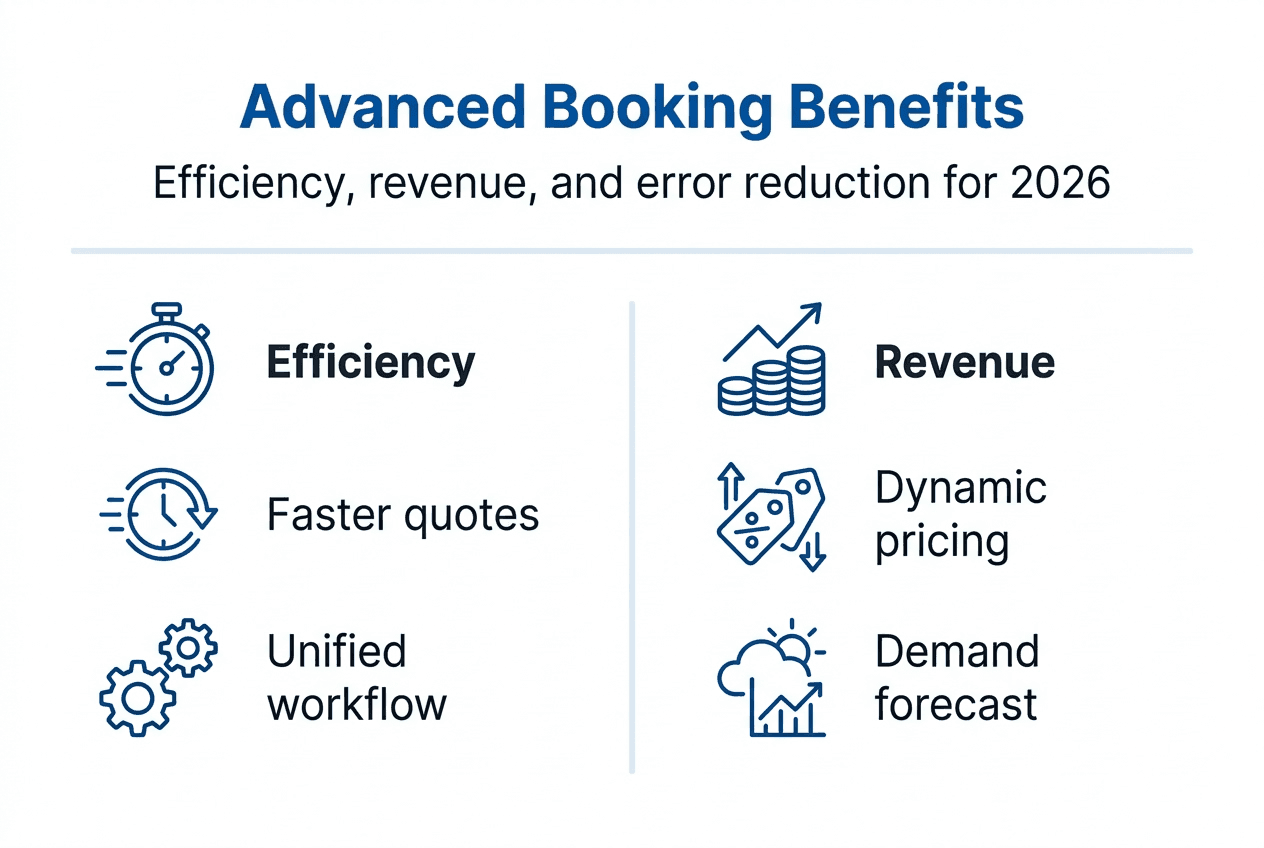
Demand forecasting analyzes historical booking patterns to predict high-value opportunities and optimize resource allocation. You can identify which routes generate the highest margins, which customer segments book furthest in advance, and which time periods justify premium positioning versus promotional discounting.
Operators using dynamic pricing models report 15% revenue increases per booking compared to static pricing approaches. This improvement comes from better matching prices to customer willingness to pay rather than using one-size-fits-all rate structures that either overprice low-demand periods or underprice peak opportunities.
Key benefits include:
Increased average transaction value through intelligent pricing that captures consumer surplus during high-demand periods
Optimized fleet utilization by using promotional pricing to fill vehicles during off-peak times instead of leaving capacity idle
Competitive advantage from responding to market conditions faster than rivals who manually adjust their rate cards quarterly or annually
Better cash flow management through pricing strategies that encourage advance bookings with discounts while charging premiums for last-minute requests
Pro Tip: Combine dynamic pricing algorithms with historical data analytics to identify your optimal price points for different customer segments and booking windows. Start with modest price ranges to build confidence, then expand your pricing flexibility as you validate the revenue impact.
The scalable fleet operations guide demonstrates how pricing intelligence works alongside route optimization to maximize profitability per vehicle mile. You avoid the common mistake of competing solely on price while your costs remain fixed, which erodes margins and trains customers to expect unrealistic discounts.
Advanced systems also support the competitive fleet management practices that enable 50% faster booking processing. When your pricing updates automatically and your availability reflects real-time vehicle status, customers complete transactions in minutes instead of waiting days for manual quote preparation and approval workflows.
Addressing implementation challenges and special considerations
Successful system adoption requires more than software installation. Your team needs comprehensive training on new workflows, and you must manage the organizational change carefully to avoid resistance that undermines adoption. Change management processes matter as much as technology selection when transitioning from familiar manual methods to automated platforms.
Remote charter operators face unique connectivity challenges that complicate cloud-based booking systems. Charter operators in remote areas need offline booking capabilities or hybrid systems that synchronize when internet access becomes available. Evaluate whether your typical operating locations have reliable connectivity before committing to systems that require constant online access.
Practical implementation tips:
Start with pilot testing on a single route or vehicle type to validate workflows and identify issues before full deployment
Use phased rollout approaches that gradually transition operations instead of attempting big-bang migrations that create chaos
Provide continuous support during the first 90 days when staff are building new habits and encountering edge cases
Configure offline mode settings if your vehicles operate in areas with spotty cellular coverage or limited WiFi access
Document your custom processes and workflows so the system configuration matches your actual operations instead of forcing artificial changes
Dr. Anya Sharma, Professor of Transportation Management at University of Toronto, explains:
The key to successful implementation is not just the technology, but also the change management process. Operators who invest in staff training and process documentation achieve 3x higher adoption rates than those who simply install software and expect immediate results.
The fleet management step-by-step guide walks through practical approaches to optimize operations without disrupting existing business. You maintain continuity while gradually introducing automation that improves efficiency and reduces the manual workload that causes staff burnout.
Budget realistic timeframes for full adoption. Most operators achieve basic proficiency within 30 days but require 90-120 days to fully leverage advanced features like dynamic pricing rules, multi-channel inventory management, and automated reporting dashboards. Plan for this learning curve instead of expecting instant transformation.
Optimize your charter operation with GridOps
Modern charter operators need integrated solutions that eliminate manual bottlenecks while expanding their sales reach. GridOps delivers a comprehensive platform designed specifically for Canadian transportation providers who want to compete effectively in 2026’s digital marketplace.

Our system streamlines your entire operation from initial quote requests through final payment processing. You gain real-time dispatch management, automated booking confirmations, dynamic pricing tools, and seamless integration with major resellers and hotel partners. This connectivity helps you capture bookings 24/7 without expanding your staff.
Discover how GridOps booking system solutions can transform your operation with the advanced capabilities covered in this guide. Request a personalized demo to see how our platform addresses your specific operational challenges and growth objectives.
Frequently asked questions about advanced booking systems for charter operators
What is an advanced booking system and how does it differ from manual booking?
An advanced booking system automates quote generation, availability checking, and reservation confirmation through integrated software instead of relying on spreadsheets and phone calls. It connects all operational aspects from customer inquiry through vehicle dispatch and payment processing in one platform, eliminating the data entry redundancies and coordination errors common in manual workflows.
How can advanced booking systems improve client satisfaction?
Clients receive instant quotes and immediate booking confirmation rather than waiting hours or days for manual responses. Real-time updates on vehicle locations and driver assignments improve transparency, while automated payment processing and digital receipts create a professional experience that matches modern service expectations. These improvements directly reduce customer complaints and increase repeat booking rates.
Are offline booking options available for operators in remote locations?
Yes, many advanced platforms offer offline or hybrid modes that allow basic booking functions without constant internet connectivity. The system synchronizes data when connection becomes available, which prevents lost bookings in areas with unreliable cellular service. Evaluate your typical operating locations and connectivity patterns when selecting a platform to ensure it supports your technical requirements.
What training is needed to implement these systems effectively?
Most staff achieve basic proficiency within two weeks of structured training focused on common workflows like quote generation and booking management. Full mastery of advanced features like dynamic pricing configuration and multi-channel inventory management typically requires 60-90 days of regular use with ongoing support. Invest in comprehensive onboarding and designate internal champions who can help teammates troubleshoot questions.
Can dynamic pricing really increase my revenue?
Yes, operators using intelligent pricing algorithms report 10-15% higher average transaction values compared to fixed rate structures. Dynamic pricing captures additional revenue during high-demand periods while using strategic discounts to fill vehicles during slower times, which improves both total revenue and fleet utilization rates. Start with conservative price ranges and expand as you validate results.
How long does implementation typically take?
Basic system setup and initial training usually requires 2-4 weeks depending on your operation’s complexity and existing data quality. Achieving full operational adoption with staff confidently using all features typically takes 90-120 days as your team builds new habits and encounters various booking scenarios. Plan for a gradual transition rather than expecting instant transformation to avoid disrupting ongoing business.
Recommended