Discover how automated reservations reduce charter fleet booking errors by 75%, improve dispatch times by 40%, and boost revenue through dynamic pricing and partner connectivity.
Benefits of automated reservations for charter fleets: Cut errors 75%
Manual booking errors cost charter operators thousands in lost revenue every year. Automated reservation systems reduce manual booking errors by 75%, drastically cutting cancellations while improving customer satisfaction. This guide walks you through the operational gains, revenue benefits, and practical steps to implement automation in your charter fleet. You’ll discover how instant booking, dynamic pricing, and partner connectivity transform your business from reactive to proactive.
Table of Contents
Understanding Automated Reservations In Charter Transport
Operational Efficiency Gains From Automation
Customer Satisfaction Improvements Via Instant Booking
Integration Of Dynamic Pricing And Financial Analytics
Fleet Utilization And Dispatch Improvements
Digital Trip Sheets And Secure Payment Processing
Connectivity With Resellers, Hotels, And Tour Providers
Common Misconceptions About Automated Reservations
Bringing It All Together: Applying Automated Reservations Effectively
Explore GridOps Solutions For Automated Reservations And Fleet Management
Frequently Asked Questions
Key takeaways
Point | Details |
|---|---|
Error reduction | Automated systems cut booking errors by 75%, reducing costly cancellations and operational disruptions. |
Faster dispatch | Automation reduces dispatch time by 40%, improving vehicle utilization and service responsiveness. |
Revenue boost | Dynamic pricing increases revenue by 10-15% through optimized rate adjustments based on demand. |
Customer satisfaction | Instant online booking raises satisfaction scores by approximately 20% with 24/7 availability. |
Market expansion | Partner connectivity expands sales reach by 25% through hotels, tour operators, and resellers. |
Understanding automated reservations in charter transport
Automated reservation systems replace manual spreadsheets and phone bookings with instant, digital booking workflows. These platforms integrate three core components: online booking portals that generate instant quotes, fleet management dashboards that track vehicle availability in real time, and channel connectivity that syncs inventory across partner networks. For charter operators, this means customers book directly on your website while your dispatch team sees every reservation update automatically.
Manual bookings create bottlenecks that slow your business. You juggle phone calls, update spreadsheets by hand, and risk double bookings when information doesn’t sync. Paperwork piles up, human errors multiply, and you lose potential customers who expect instant confirmation. Your sales reach stays limited to whoever finds your phone number, missing the massive online market where travelers book transportation.
Integration transforms isolated booking data into actionable fleet intelligence. When reservations flow directly into your dispatch system, you eliminate the manual data entry that causes mistakes. Scalable fleet operations depend on this seamless connection between booking, scheduling, and vehicle assignment. Your team spends less time on administrative tasks and more time optimizing routes and service quality.
Successful automation requires basic digital infrastructure. Your staff needs sufficient computer literacy to navigate dashboards and troubleshoot simple issues. Reliable internet connectivity ensures booking data syncs without delays. Most importantly, you need leadership commitment to train teams properly and phase out manual habits that undermine the new system’s efficiency.
Operational efficiency gains from automation
Automated reservation systems reduce manual booking errors by 75%, which directly translates to fewer customer cancellations and smoother daily operations. When booking details flow digitally from customer to dispatch without manual reentry, typos and miscommunications vanish. Your cancelation rate drops, your reputation improves, and you stop losing revenue to avoidable mistakes.
Administrative workload shrinks dramatically when automation handles repetitive tasks. Instead of spending hours transcribing phone bookings into spreadsheets, your staff focuses on customer service and operational optimization. Paperwork that once consumed entire afternoons now generates automatically. Invoices, trip confirmations, and dispatch sheets appear instantly without manual formatting or data lookup.
Automation reduces dispatch time by 40%, getting vehicles on the road faster and reducing idle time between jobs. Your dispatch team sees real time vehicle locations and availability, assigning the nearest driver to new bookings within seconds. This speed improvement compounds across your entire fleet, allowing you to serve more customers per day without adding vehicles.
Pro Tip: Automate your three most time consuming repetitive tasks first (usually booking confirmation, invoice generation, and daily dispatch scheduling) to demonstrate immediate ROI and build staff confidence in the system.
Integration with fleet management systems amplifies these gains. When bookings automatically update vehicle schedules, maintenance alerts, and driver assignments, your entire operation runs on synchronized, accurate data. You maximize fleet efficiency by eliminating the information delays that cause idle vehicles and missed opportunities. Competitive fleet management 2026 standards demand this level of operational coordination.
Customer satisfaction improvements via instant booking
Instant online booking increases customer satisfaction scores by approximately 20% because travelers expect immediate confirmation in 2026. When visitors land on your website and receive a quote within seconds, they trust your professionalism and modern capabilities. Compare this to waiting hours or days for a phone callback, uncertainty that often sends customers to faster competitors.
Faster confirmations reduce customer anxiety during the decision making process. The moment someone enters trip details and sees an available vehicle with transparent pricing, booking becomes a simple click rather than a negotiation. This transparency builds trust and reduces the hesitation that causes abandoned bookings. Your conversion rate improves because friction disappears from the customer journey.
Self service booking options lower no show rates by giving customers control and clarity. When travelers can review their reservation details anytime, modify bookings online, and receive automated reminders, they stay engaged with their trip plans. You spend less time chasing confirmations and more time preparing excellent service. Real time booking benefits extend beyond convenience to operational predictability.
Automated communication keeps customers informed at every stage. Booking confirmations arrive instantly by email. Trip reminders go out 24 hours before pickup. Real time driver tracking links show vehicle location during service. These touchpoints demonstrate professionalism and reduce the anxious calls asking “Where’s my ride?” that burden your dispatch team.
Twenty four seven booking availability captures customers in different time zones and with varied schedules. Your website takes reservations while you sleep, on weekends, and during holidays when phone lines close. This extended availability directly increases booking volume without requiring additional staff hours or operational changes.
Integration of dynamic pricing and financial analytics
Dynamic pricing increases revenue by 10-15% by automatically adjusting rates based on demand, vehicle availability, and competitive factors. Instead of static rate sheets that leave money on the table during high demand or scare away customers during slow periods, algorithms optimize pricing in real time. You capture maximum value from every booking without constant manual rate monitoring.
Real time financial dashboards provide instant visibility into booking trends, revenue performance, and pricing effectiveness. You see which routes generate highest margins, which customer segments book most frequently, and where pricing adjustments could improve profitability. This data driven approach replaces guesswork with evidence, enabling confident business decisions.
Automation eliminates manual pricing errors that occur when staff quote outdated rates or miscalculate distance based charges. Your system pulls correct pricing automatically based on trip parameters, ensuring consistency across all booking channels. Customers receive accurate quotes whether they book online, through partners, or via your dispatch team.
Pricing Model | Average Revenue per Trip | Booking Conversion Rate | Admin Time per Quote |
|---|---|---|---|
Static pricing | $450 | 12% | 8 minutes |
Dynamic pricing | $518 | 18% | Instant |
Pro Tip: Review your dynamic pricing data weekly for the first month, then monthly thereafter. Look for patterns where rates consistently hit ceiling or floor limits, indicating opportunities to adjust your pricing parameters for even better optimization.
Dynamic pricing and analytics work together to create a continuous improvement cycle. Analytics reveal demand patterns, pricing algorithms respond automatically, and dashboards show the revenue impact. This closed loop system helps your fleet stay competitive while maximizing profitability across varying market conditions.
Fleet utilization and dispatch improvements
Automated platforms integrated with fleet management reduce dispatch time by 40%, compressing the window between booking confirmation and vehicle assignment. Your dispatch team no longer manually searches spreadsheets for available vehicles or calls drivers to check status. The system displays real time availability, auto assigns optimal vehicles based on location and capacity, and notifies drivers instantly through mobile apps.
Vehicle idle time drops when intelligent scheduling fills gaps between bookings automatically. Your system identifies opportunities to serve multiple customers with efficient routing, reducing the dead time when vehicles sit unused. This improved utilization means you generate more revenue from your existing fleet without capital investment in additional vehicles.
Real time trip monitoring provides visibility into active reservations across your entire fleet. You see which vehicles are en route, which completed service, and which encountered delays. This operational awareness enables quick adjustments when problems arise, such as reassigning a backup vehicle when mechanical issues ground a bus.
Dispatch Metric | Manual Process | Automated System | Improvement |
|---|---|---|---|
Average dispatch time | 12 minutes | 7 minutes | 42% faster |
Booking to assignment accuracy | 82% | 97% | 18% better |
Daily vehicle utilization rate | 64% | 79% | 23% increase |
Driver notification speed | 15 minutes | Instant | Real time |
Pro Tip: Set up automated alerts for vehicles approaching maintenance intervals or showing extended idle times. Proactive notifications help you address utilization issues and maintenance needs before they become costly problems.
Optimize fleet operations by connecting dispatch automation with preventive maintenance scheduling and driver performance tracking. When your system knows each vehicle’s service history and upcoming bookings, it can flag scheduling conflicts before they impact customers. Streamlined reservation tracking ensures dispatch decisions use complete, accurate information rather than fragmented data from multiple sources.
Digital trip sheets and secure payment processing
Digital trip sheets reduce paperwork by 60%, replacing manual logs with automated documentation that captures trip details electronically. Drivers complete trip sheets on tablets or phones, recording mileage, passenger counts, route variations, and service notes without handling paper forms. This data flows directly into your management system, eliminating the transcription work that consumes administrative hours.
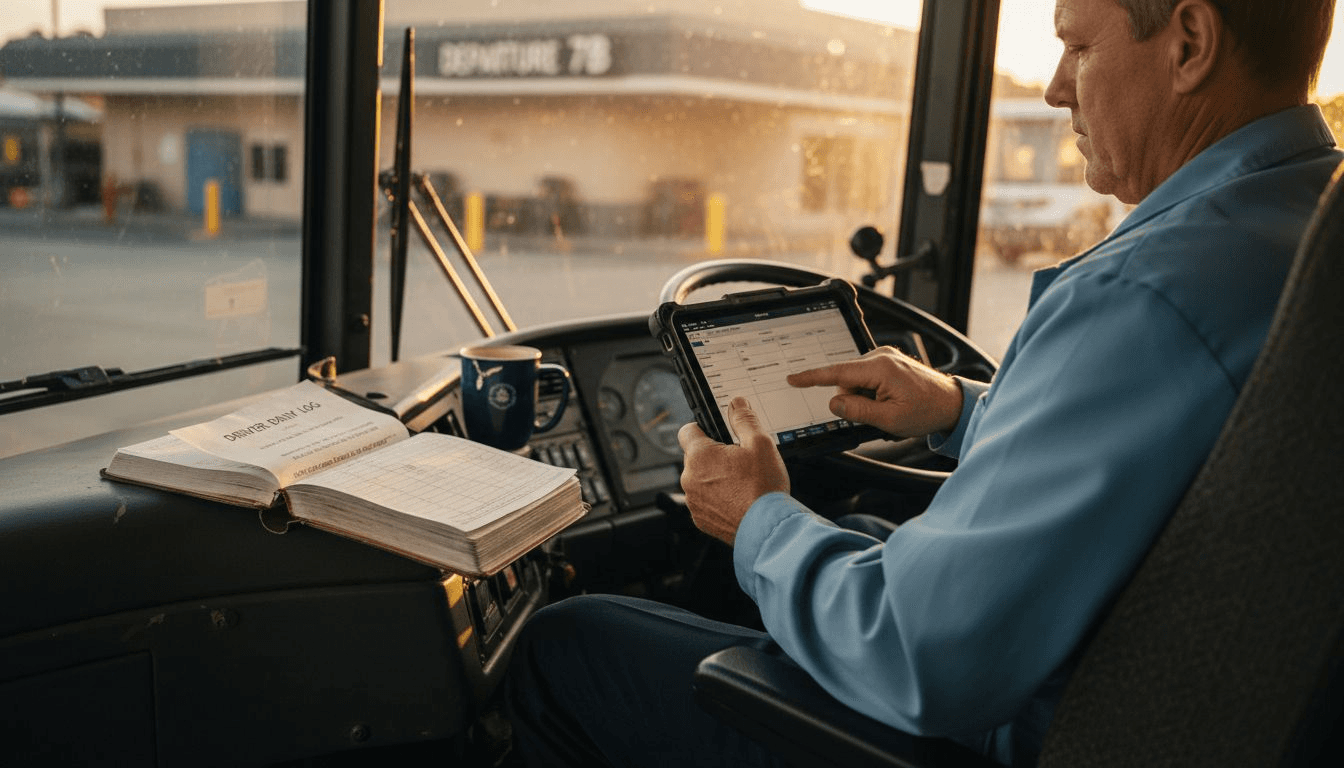
Compliance reporting becomes straightforward when digital records organize trip data systematically. You generate regulatory reports with a few clicks rather than compiling information from scattered paper files. Audit trails show exactly when trips occurred, who drove them, and what services were provided, satisfying regulatory requirements and insurance inquiries efficiently.
Secure credit card processing protects customer payment data through encrypted transactions and PCI compliant systems. Your customers trust their financial information stays safe, and you avoid the liability risks of storing card numbers in spreadsheets or handwritten receipts. Automated payment processing also reduces the disputes that occur when manual charges contain errors or take days to process.
Post trip financial reconciliation accelerates when trip data and payment information sync automatically. Your accounting team sees exactly which services generated which revenue, matching trips to payments without manual cross referencing. This speed and accuracy improve cash flow visibility and reduce the month end closing work that delays financial reporting.
Faster invoicing gets you paid sooner. Automated systems generate invoices immediately after trip completion, sending them to customers while service is fresh in their minds. Early invoicing improves payment timing and reduces the follow up required to collect outstanding balances. You spend less time managing accounts receivable and more time growing your business.
Connectivity with resellers, hotels, and tour providers
Connectivity expands sales reach by 25% through partner networks that expose your services to customer bases you couldn’t efficiently reach alone. Hotels recommend your charter services to guests needing group transportation. Tour operators include your fleet in package offerings. Resellers list your availability on high traffic booking platforms. Each partnership opens a new customer acquisition channel without traditional marketing costs.
Automated inventory management prevents overbooking across multiple sales channels. When a hotel concierge books one of your vehicles, that availability updates instantly across your website, partner platforms, and dispatch system. You never face the embarrassing situation of confirming bookings you can’t fulfill because different channels operated on outdated information.
Tapping into hotel and tour operator customer bases leverages their existing marketing efforts. These partners already invested in attracting travelers who need transportation services. By integrating with their booking systems, you capture demand they generate without spending on advertising or lead generation. Your service becomes a convenient add on to their core offerings.
Partner marketing channels provide exposure you couldn’t afford independently. A major hotel chain’s website receives thousands of daily visitors. Tour operator catalogs reach travelers planning group trips months in advance. Reseller platforms aggregate demand from multiple sources. Your connectivity makes your fleet visible in all these high value environments simultaneously.
Reduced workload compared to manual channel management saves hours daily. Instead of answering booking inquiries from multiple partners separately, your system handles requests automatically. Rate updates propagate to all channels instantly without individual notifications. Partner reporting generates automatically rather than requiring manual compilation. This efficiency lets you serve more partners without proportional increases in administrative staff.
Common misconceptions about automated reservations
Myth: Automation costs too much for small operators and requires complex technical expertise beyond typical fleet management capabilities. Fact: Cloud based booking platforms offer scalable pricing models that charge based on booking volume or fleet size, making them accessible to operations with just a few vehicles. Many platforms require no specialized IT knowledge, offering intuitive interfaces and vendor provided training and support.
Myth: Manual bookings provide more reliability and personal service than automated systems that might fail or frustrate customers seeking human interaction. Fact: Automated systems actually reduce no shows and booking errors dramatically compared to phone based processes where miscommunication and forgotten details occur frequently. You can still provide personal service by using automation to handle routine transactions while dedicating staff time to complex customer needs and relationship building.
Myth: Implementing automation disrupts operations severely, requiring lengthy downtime and forcing uncomfortable changes on experienced staff resistant to new technology. Fact: Phased training minimizes operational impact by introducing automation gradually alongside existing processes. Most platforms run in parallel with manual systems during transition periods, letting staff build confidence before full cutover. Properly managed implementations enhance rather than disrupt service quality.
Modern automated reservation systems democratize technology that once required enterprise budgets and IT departments. Small charter operators now access the same booking automation, dynamic pricing, and partner connectivity that large transportation companies use, leveling the competitive playing field and enabling growth without proportional cost increases.
Overcoming these misconceptions requires seeing automation as an operational tool rather than a wholesale replacement of human judgment and service. Technology handles repetitive, error prone tasks while your team focuses on the strategic decisions and customer relationships that truly differentiate your charter service from competitors.
Bringing it all together: applying automated reservations effectively
Implementing automated reservations successfully requires a structured approach that addresses your specific operational context and business goals.
Assess current booking inefficiencies by tracking how much time staff spend on manual booking tasks, how many errors occur monthly, and what percentage of inquiries convert to confirmed reservations. Document the pain points causing most frustration for your team and customers. This baseline measurement lets you demonstrate ROI after implementation.
Evaluate platforms for scalability, integration capabilities, and security features that match your fleet size and growth plans. Prioritize systems offering transparent pricing models, proven integration with your existing software, and robust customer support. Test user interfaces with actual staff members who will use the system daily to ensure intuitive operation.
Implement with phased training that introduces automation gradually, starting with one booking channel or vehicle type before expanding. Run parallel systems briefly so staff can verify automated results against familiar manual processes. Measure key metrics weekly during rollout to identify issues early and celebrate quick wins that build momentum.
Criteria prioritization should emphasize integration depth over feature quantity. A system that syncs seamlessly with your existing fleet management and accounting software delivers more value than a feature rich platform requiring duplicate data entry. Security certifications and compliance with payment processing standards protect your business and customer data. Scalability ensures the platform grows with your business without expensive migrations or limitations.
Pro Tip: Common pitfalls include rushing data migration without cleaning historical records first, underestimating training time required for staff with varying technical skills, and forgetting to update pricing strategies when switching from manual to dynamic models. Address these proactively by allocating extra time for data cleanup, creating role specific training materials, and consulting pricing best practices before launch.
Explore GridOps solutions for automated reservations and fleet management
The operational benefits and revenue improvements discussed throughout this guide become reality when you implement the right platform for your charter fleet. GridOps integrates automated reservations with comprehensive fleet management, offering Canadian operators a proven solution built specifically for the challenges you face daily.
GridOps reduces booking errors and speeds dispatch through seamless integration between customer facing reservation tools and back office fleet management dashboards. Your team gains the dynamic pricing capabilities and reseller connectivity that expand your market reach without expanding your workload.

Whether you operate a small shuttle service or manage a large charter fleet, GridOps scales to your needs with flexible pricing and implementation support. The platform’s secure payment processing, digital trip sheets, and real time analytics deliver the complete automation stack that transforms manual operations into efficient, profitable businesses. Explore the fleet management step by step guide to understand implementation approaches, review competitive fleet management solutions to see performance benchmarks, or visit GridOps charter reservation system to request a demo and discover how automation can transform your operations.
Frequently asked questions
What size operators benefit most from automation?
Operators of all sizes gain value from automated reservations, though the specific benefits vary by fleet scale. Small operators with 3-10 vehicles eliminate the manual workload that prevents growth beyond current capacity. Medium fleets serving 10-50 vehicles reduce dispatch complexity and enable partner connectivity that drives new revenue streams. Large operations use automation to maintain service quality and coordination across extensive fleets and multiple locations.
How hard is it to train staff on new reservation systems?
Most modern platforms feature intuitive interfaces requiring 2-4 hours of initial training for basic proficiency. Staff familiar with smartphones and web browsing adapt quickly to dashboard navigation and routine tasks. Vendors typically provide onboarding support including video tutorials, documentation, and direct assistance during early weeks. Phased rollout approaches let teams build confidence gradually rather than learning everything simultaneously.
Can automated reservations integrate with existing fleet software?
Quality automated reservation platforms offer integration with major fleet management, accounting, and dispatch systems through APIs and data connectors. Integration depth varies by platform and existing software, ranging from basic data exports to real time bidirectional synchronization. Evaluate integration capabilities carefully during platform selection, requesting demonstrations of data flow between systems using your specific software environment.
Is dynamic pricing safe for customer relationships?
Dynamic pricing enhances customer relationships when implemented transparently with reasonable price ranges. Customers accept variable pricing for transportation services just as they do for hotels and airlines, provided rates reflect clear value factors like demand, timing, and availability. Communicate your pricing approach openly, avoid extreme fluctuations that appear arbitrary, and ensure your rates remain competitive within your market. Most customers appreciate instant quotes and availability more than they resist modest price variations.
How does automation ensure payment security?
Automated systems protect payments through encryption, tokenization, and PCI DSS compliance that meet banking industry security standards. Customer card data never stores in readable form, instead converting to secure tokens that process payments without exposing sensitive information. Regular security audits, fraud detection algorithms, and secure server infrastructure provide multiple protection layers. These measures exceed the security possible with manual payment handling and paper records.
How quickly can operators see ROI from automated reservations?
Most operators observe measurable returns within 60-90 days through reduced administrative time, fewer booking errors, and increased conversion rates from instant online quoting. Larger fleets with higher booking volumes often see positive ROI within 30 days. Calculate your expected ROI by estimating hours saved weekly on manual booking tasks, revenue recovered from reduced cancelations, and new bookings enabled by 24/7 availability and partner connectivity.
Recommended